Category: Uncategorized

  • The Power of Your Name

    The Power of Your Name

    Most people did not choose their own name. It was given to them by their parents, family, or tradition. Still, this name stays with them for their whole life. A name is more than a word. It carries history. It carries expectations. It shapes how we see ourselves and how others see us.

    Every name has a meaning. In many cultures, names are chosen with care and intention. They may reflect values, hopes, or qualities that parents admire. Often, a name is connected to role models, respected leaders, family members, or important figures in the lives of parents. In this way, a name can carry a story even before a child begins their own journey.

    Examples of name meanings of known People:

    • Donald: “ruler of the world” or “powerful leader”
    • Waldemar / Wladimir / Wolodymyr: “famous ruler” or “great leader”
    • Jinping can be understood as “approaching balance” or “close to fairness.”

    Your Name and Your Background

    Many people have beautiful and strong names. Often, these names were inspired by role models, friends, or important people in the lives of their parents.

    Parents usually take great care when choosing a name. A name often carries hope, love, and good wishes.

    Over time, names are sometimes shortened, softened, or turned into nicknames. For example, Thomas may become Tommy. A public figure such as Bastian Schweinsteiger may be called Schweini, while his full last name sounds more formal and strong. Each version of a name can create a different feeling.

    Nicknames can express closeness, affection, humor, or belonging. At the same time, they can also shape how a person sees themselves. A softer or playful name may influence confidence, identity, or how seriously someone feels they are taken.

    At the same time, accepting your own name is not always easy. Some people connect their name with pressure, expectations, or difficult experiences.

    To think about your name does not mean to judge it. It means to understand it.

    Names in the Bible – Identity and Purpose

    In the Bible, names have a clear role. A name does not only identify a person. It also shows identity, character, and purpose.

    Examples:

    • Isaac means “he laughs.”
    • Moses is explained as “drawn out of the water.”
    • Abraham means “father of many nations.”
    • Elizabeth means “God is fullness” or “God is my oath.”

    These examples show that a name carries a message. But life gives this message real meaning.

    Conscious Choice and Direction

    Looking at your name can help in personal growth.

    A name can be a starting point for:

    • clarity about who you are
    • honest self-reflection
    • taking responsibility for your direction in life

    Your name does not control your life. But you decide what your name will stand for.

    Name Change – A Sign of a New Chapter

    In the Bible, a name change often shows a new calling.

    Examples (before – after):

    • Abram (“exalted father”) → Abraham (“father of many nations”)
    • Sarai (“my princess”) → Sarah (“princess”)
    • Jacob (“heel holder / deceiver”) → Israel (“God fights” or “God rules”)
    • Simon (“God has heard”) → Peter (“rock”)

    Today, a name change is also possible – legally or symbolically.

    It may make sense when:

    • a new phase of life begins
    • a personal calling becomes clear
    • life circumstances change deeply

    What matters most is not the outer act, but inner clarity. A new name can make a conscious decision visible.

    Final Reflection

    At first, thinking deeply about your own name may seem strange or unnecessary. It is just a name, something you hear every day. But looking closer can have a strong impact on your life. Your name connects you to your history, your family, and the hopes that were once placed on you. It also connects you to the way you see yourself today.

    Sometimes, growth means accepting your name and the story behind it. Acceptance can bring peace, clarity, and strength. Sometimes, growth means changing your name — legally or symbolically — when a new calling becomes clear or when life changes in a deep way.

    Whether you keep your name or change it, the important question remains: What will your name stand for?

    Working with your name is not about letters or sounds. It is about identity, direction, and responsibility. The goal is to see the good in your name and in your identity. To recognize the strength, the story, and the potential that are already there.

    A name may be given. But it can be embraced with confidence and shaped with purpose.

  • Divorce and Remarriage – Jesus’ Perspective

    Divorce and Remarriage – Jesus’ Perspective

    In matters of marriage, divorce, and remarriage, there is considerable uncertainty, especially among Christians. Various explanations and individual interpretations often lead to confusion. This article compiles the statements of Jesus and presents the actual textual findings in a clear and objective manner.

    Central Biblical Passages in Which Jesus Speaks About Divorce

    Matthew 5:31–32

    It hath been said, Whosoever shall put away his wife, let him give her a writing of divorcement: But I say unto you, That whosoever shall put away his wife, saving for the cause of fornication, causeth her to commit adultery: and whosoever shall marry her that is divorced committeth adultery.

    Matthew 19:3–9

    The Pharisees also came unto him, tempting him, and saying unto him, Is it lawful for a man to put away his wife for every cause? And he answered and said unto them, Have ye not read, that he which made them at the beginning made them male and female, And said, For this cause shall a man leave father and mother, and shall cleave to his wife: and they twain shall be one flesh? Wherefore they are no more twain, but one flesh. What therefore God hath joined together, let not man put asunder. They say unto him, Why did Moses then command to give a writing of divorcement, and to put her away? He saith unto them, Moses because of the hardness of your hearts suffered you to put away your wives: but from the beginning it was not so. And I say unto you, Whosoever shall put away his wife, except it be for fornication, and shall marry another, committeth adultery: and whoso marrieth her which is put away doth commit adultery.

    Mark 10:2–12

    And the Pharisees came to him, and asked him, Is it lawful for a man to put away his wife? tempting him. And he answered and said unto them, What did Moses command you? And they said, Moses suffered to write a bill of divorcement, and to put her away. And Jesus answered and said unto them, For the hardness of your heart he wrote you this precept. But from the beginning of the creation God made them male and female. For this cause shall a man leave his father and mother, and cleave to his wife; And they twain shall be one flesh: so then they are no more twain, but one flesh. What therefore God hath joined together, let not man put asunder. And in the house his disciples asked him again of the same matter. And he saith unto them, Whosoever shall put away his wife, and marry another, committeth adultery against her. And if a woman shall put away her husband, and be married to another, she committeth adultery.

    Luke 16:18

    Whosoever putteth away his wife, and marrieth another, committeth adultery: and whosoever marrieth her that is put away from her husband committeth adultery. 

    When Is Remarriage Permitted?

    From the Man’s Perspective

    If a man sends away his wife, he remains bound to his wife. Entering a new marriage is then considered adultery against the woman.

    An exception is mentioned if the wife has committed “fornication.” The term is not clearly defined in the original text and, depending on interpretation, can refer to various forms of sexual misconduct.

    At the same time, it is possible for a man to marry an additional wife without a formal divorce from the first one.

    From the Woman’s Perspective

    A woman who “puts away” her husband (that is, initiates a separation) and then marries another man commits adultery. (Mark 10, 12)

    She had no legal right to initiate a divorce from her husband. The divorce law was asymmetrical, granting this authority only to the man. According to Jesus’ explanation, however, divorce is fundamentally not possible.

    Conclusion

    Put simply and based strictly on the wording of Jesus’ statements, remarriage is only permitted in the specific situation in which the wife has committed fornication. 

    Adultery

    Adultery is committed by a woman when she engages in sexual relations with another man while married.

    For a man, it is considered adultery when he has sexual relations only with a married woman.

    Statements such as: “My husband committed adultery, therefore I have the right to divorce him” do not align with the divine order as understood in this context. A husband’s adultery does not grant the woman an independent right to initiate a divorce.

    However, if the woman commits adultery, the marriage is viewed as automatically dissolved (The prescribed punishment was death by stoning)

    Fornication – ervat davar → porneia

    In Deuteronomy 24:1, divorce is mentioned in connection with ervat davar (“something shameful / nakedness of a matter”). This expression was the subject of rabbinic discussion in the time of Jesus (the schools of Hillel and Shammai).

    When the New Testament was written in Greek, ervat davar was rendered as πορνεία (porneia).

    During the time of Jesus, two main rabbinic interpretations existed:

    School of Shammai

    • ervat davar = sexual misconduct, but not necessarily adultery (since adultery, according to the Torah, carried the death penalty).
    • Meaning: Only a serious form of sexual wrongdoing justified divorce.

    School of Hillel

    • ervat davar = almost any form of offense, even trivial reasons.
    • Meaning: Divorce was permitted even for minor causes.

    Deliberate Openness of the Term

    The expression ervat davar (“a shameful matter”) is neither legally defined nor illustrated with clear examples in the Hebrew text. The term was intentionally formulated to allow interpretive flexibility. This flexibility enabled the application of the law to various situations without requiring the Torah to list specific violations.

    Function for the Elders of the Community

    In early Israelite communities, the elders at the gate played a central role in resolving disputes, family conflicts, and legal matters. A deliberately open expression such as ervat davar allowed them to:

    • examine the specific situation,
    • evaluate the nature of the misconduct, and
    • make a decision appropriate to both the law and the circumstances.

    This allowed legal decisions to be adapted to the dynamic needs of the community.

    Conclusion

    Divorce is not provided for in God’s order. If a so‑called “divorce” is nevertheless pronounced, it does not constitute the dissolution of the marriage established by God but represents only an external, legal, or social separation. The original marriage bond remains intact because it cannot be dissolved by human decisions or legal actions.

  • Female Bodily Closeness in the Bible

    Female Bodily Closeness in the Bible

    In biblical anthropology, the body is not a bearer of guilt but a place of faithfulness.

    Closeness between women is depicted several times in the Old Testament. As tenderness, embrace, kiss, or shared weeping. And expresses a love rooted in care, loyalty, and divine presence.

    Scripture knows no separation between spirit and body: affection becomes physically tangible and thereby sacred.

    Background

    In ancient Near Eastern society, female closeness was a natural part of social life.

    Women shared living spaces, work, care, childbirth, mourning, and celebration. The body was a place of community, not separation. The Old Testament reflects this culture.

    Physical tenderness was a sign of trust, not a cause for moral judgment.

    The Bible mentions sexual acts only in the context of male activity (yadaʿ – “to know”), which is why female tenderness was never legally defined as sexuality. Thus: no prohibition, no ritual law, no sacrifice — it lay outside discourse.

    Ruth and Naomi

    The kiss (Ruth 1:9) and the clinging (Ruth 1:14) form two stages of closeness:

    • Kiss – expression of blessing and tenderness.
    • Clinging – enduring loyalty and a decision for shared future.

    The scene is intentionally ambivalent: emotionally deep, physically warm.

    The Old Testament distinguishes between eroticism (the power of attraction, vitality, intimacy) and sexuality (the act of procreation).
    In this sense, female closeness can be erotic: Sensual, tender, loving

    The Bible does not devalue such affection; it recognizes in it divine energy that preserves life. Thus arises a feminine expression of divine eros: not through possession but through care, not through procreation but through faithfulness.

    Faithfulness of Women: Deborah, Hannah, and Esther

    The order of leaving and clinging unfolds in Israel not only in domestic but also in prophetic and national dimensions. While men often appear as bearers of covenant duty, Deborah, Hannah, and Esther show that God’s Spirit is not bound by gender, status, or origin but acts where faithfulness, courage, and devotion align with His will.

    These three women form an ascending movement:

    • Deborah – prophetic judge: faithfulness through leadership.
    • Hannah – praying mother: faithfulness through surrender.
    • Esther – royal intercessor: faithfulness through sacrifice.
    • Each leaves an established order and clings to a higher one.

    Deborah – Clinging to God through Responsibility

    “Now Deborah, a prophetess, the wife of Lappidoth, was judging Israel at that time.” (Judges 4:4)

    Deborah stands as the only female judge — proof that God binds His authority not to gender but to obedience and courage.

    She leaves the private sphere and enters the public law of Israel. She sits “under the Palm of Deborah” (Judges 4:5), a symbol of divine justice.

    When Barak hesitates, she declares:

    “I will surely go with you; nevertheless, the honor will not be yours, for the Lord will deliver Sisera into the hands of a woman.” (Judges 4:9)

    Her clinging is to God, not to man — a spiritual authority, not subordination. In her, dāvaq becomes responsibility: faithfulness means standing for God’s order when others fail.

    Hannah – Clinging to God through Prayer and Offering

    “I was pouring out my soul before the Lord.” (1 Samuel 1:15)

    Hannah’s story is one of letting go.

    She is barren and mocked by Peninnah, yet instead of fighting, she enters the temple — into conversation with God.

    Her prayer is bodily, silent, heart-driven; Eli mistakes her for drunk because she is so near to God.

    She clings to the Lord, not to human judgment.

    “I have lent him to the Lord; as long as he lives, he is lent to the Lord.” (1 Samuel 1:28)

    Here dāvaq reaches its purest form: to cling to God is to release what one loves.

    Hannah becomes the archetype of Israel’s praying mother — her body carries life, her spirit carries faith.

    Esther – Clinging to God in Hiddenness

    “And who knows whether you have come to the kingdom for such a time as this?” (Esther 4:14)

    Esther embodies faithfulness in exile — a woman hidden in a palace, seemingly powerless, yet chosen for divine salvation.

    She leaves her protective silence, risking her life before the king:

    “If I perish, I perish.” (Esther 4:16)

    Her clinging is loyalty against assimilation — Israel in exile: hidden yet not abandoned.

    The Book of Esther never mentions God’s name, yet His providence fills every line. Esther’s courage shows that true dāvaq endures even in silence.

    Comparison

    WomanAct of LeavingForm of ClingingTheological Fruit
    DeborahLeaving passivityClinging to callingProphetic authority
    HannahLeaving painClinging in prayerBirth of promise
    EstherLeaving safetyClinging in riskSalvation of the people

    Together they form a triad of prophetic faithfulness, showing that God’s Spirit acts wherever faith dares to leave and to cling anew.

    New Testament

    Mary and Elizabeth

    Like Ruth and Naomi, their encounter is bodily and spiritual. Both women are filled with the Spirit. Mary’s greeting causes the child in Elizabeth’s womb to leap for joy.

    The body becomes a place of revelation: God works not abstractly but through female closeness. Their mutual blessing forms a covenant of joy that continues Ruth’s covenant of faithfulness.

    Mary and Elizabeth are the New Testament counterparts of Ruth and Naomi: Witnesses that divine life is conceived, carried, and confirmed through women in communion.

    Mary and Martha

    Two sisters, two ways of loving God: Mary in contemplation, Martha in service. Their relationship mirrors two forms of clinging: listening and serving.

    Jesus does not rebuke either but brings them into harmony:

    “Mary has chosen the better part, which shall not be taken away from her.” (Luke 10:42)

    They embody the body of fellowship: Affection, hospitality, closeness without domination.

    Mary Magdalene and the Women at the Tomb

    Here female faithfulness reaches its climax.

    • While the disciples flee, the women remain.
    • They follow the body of Jesus into the tomb.
    • Mary Magdalene “turns around,” recognizes the risen Lord, and “touches” Him (John 20:17 – mē mou haptou).

    The Greek haptomai (“to touch, to hold fast”) mirrors Hebrew dāvaq.

    Thus, women cling to the Lord. Not in flesh but in spirit.

    Their touch completes the covenant:

    • Ruth clings to Naomi — covenant of faith
    • Mary clings to the risen Christ — covenant of redemption.

    Physical Closeness Between Women as a Sign of Holiness

    Physical closeness between women in the Bible is not taboo but a sign of holiness. It is bodily, because true faithfulness includes the body — and it is erotic, because divine love is always

    In shared care and comfort, God’s nearness becomes visible. Clinging between women mirrors God’s own faithfulness: The One who never leaves but abides.

    “As a mother comforts her child, so will I comfort you.” (Isaiah 66:13)

    This maternal, bodily, and consoling love stands at the heart of divine revelation.

  • Children — Fruit of the Tree of Life

    Children — Fruit of the Tree of Life

    Biblical thought often describes children in agrarian and organic imagery, particularly as the fruit of the tree of life, the family, or God’s blessing. This image is not merely poetic but carries deep theological and anthropological meaning: children are the fruit of union (parenthood), a sign of divine blessing, and bearers of the family’s continuation. The image of the tree and its fruit also explains upbringing as cultivation and fruit-bearing: what is healthy in the trunk (parents, faith, roots) produces good fruit in the children.

    Biblical Foundations of the Fruit Image

    Children as “Fruit of the Womb”
    This image appears explicitly in several places:

    Psalm 127:3–5:
    “Behold, children are a heritage from the LORD, the fruit of the womb a reward. Like arrows in the hand of a warrior are the children of one’s youth.”

    Here, fruit stands for growth, procreation, and divine reward.

    Psalm 128:3:
    “Your wife shall be like a fruitful vine within your house; your children will be like olive shoots around your table.”

    Marriage and family appear as a tree-garden structure, where fruitfulness and blessing intertwine.

    Deuteronomy 28:4:
    “Blessed shall be the fruit of your womb and the fruit of your land…”

    Children and harvest are parallel metaphors of blessing, signs of divine life-giving power.

    These texts link children with fertility, life, and the promise of blessing. Children are therefore not merely “offspring,” but the visible expression of the life-flow that God grants.

    The Tree as a Symbol of Family and Upbringing

    Trunk, Roots, and Branches

    The tree symbolizes continuity and rootedness: Abraham is the “root,” his descendants are the “branches”

    The father’s house resembles a tree whose trunk carries the lineage, while the children appear as its fruit.

    To “bear fruit” in Hebrew means both to reproduce and to act morally

    Upbringing as Care of the Tree

    If children are “fruit,” then upbringing means:

    • strengthening the roots (faith, covenant, identity),
    • maintaining the trunk (family order, discipline),
    • and nurturing the fruit (character, deeds, descendants).

    Just as a tree bears fruit only when its roots are deep and its trunk sound, a child can thrive only when father and mother. Trunk and root act in harmony.

    Deut. 6:7 (“You shall teach them diligently to your children”) can thus be understood as a command to cultivate and foster growth.

    Theological Dimension

    Children as Divine Growth

    The fruit metaphor reveals that children arise not merely from human effort but from divine life-force. Like a plant that grows “though you do not know how” (Mark 4:27), the growth of a child is a mystery of divine cooperation.

    Human Responsibility

    Humans are God’s co-gardeners. This applies to:

    • Procreation – “Be fruitful and multiply” (Gen 1:28),
    • Education – “Teach them to your children” (Deut 6:7),
    • Preservation – “Train up a child in the way he should go” (Prov 22:6).

    The fruit metaphor thus links creation with educational responsibility: children are not possessions, but entrusted fruit to be cared for.

    Symbolic Structure: The Family as a Tree

    ElementCorrespondenceTheological Meaning
    RootOrigin, faith, covenant with GodSource of identity
    TrunkFather and mother / familyStructure, stability, transmission
    BranchesChildren / generationsExpansion, growth
    FruitChildren (in the narrower sense), works, characterVisible expression of life
    GardenerGod and parentsResponsibility, care, guidance

    This image shows the generational dynamic: the father’s house is rooted in the covenant; the mother’s house nourishes and shapes the fruit within. Together they form the family’s tree of life.

    Parallels in Wisdom and the Prophets

    • Proverbs 11:30: “The fruit of the righteous is a tree of life” — fruit and tree are here synonymous with moral maturity.
    • Isaiah 61:3: “Trees of righteousness, the planting of the LORD” — people themselves become trees that bear justice.
    • Psalm 1:3: “He is like a tree planted by streams of water, which yields its fruit in season.”

    Here too, fruit equals effect, posterity, life’s achievement.

    Thus biblical thought knows no separation between biological and spiritual fruit: both are signs of successful life in covenant with God.

    Conclusion and Interpretation

    In the biblical worldview, children are the fruit of a living household — not objects, but witnesses of blessing and care. Like fruit, they bear the qualities of the tree from which they come:

    • in their form they reflect origin and character,
    • in their growth the inner state of the home,
    • in their taste (their deeds) the spiritual substance of the roots.

    The saying “Children are like the fruit of a tree” thus sums up a profoundly biblical principle:

    What a person plants in love, faith, and righteousness will continue to grow in their children.

  • Halloween: The Cult of Death Must Be Removed from the Church

    Halloween: The Cult of Death Must Be Removed from the Church

    Halloween – The Modern Cult of Death

    The message of the Gospel is not “Remember the dead,” but “He is not here; He has risen!”

    The resurrection of Jesus Christ is the very heart of faith. It separates light from darkness, life from death, truth from superstition. Every form of death cult, whether in symbols, festivals, or religious customs, turns the gaze away from the living Christ toward something that God has already conquered.

    The cult of death represents a return to what Christ has already defeated. It takes what was disarmed through the Cross and puts it back on display. In doing so, salvation is distorted, because the power of death is once again given attention. The Bible warns: “The last enemy to be destroyed is death.” (1 Corinthians 15:26) Why then should the Church give a stage to the enemy of life?

    On November 1, 1755, the Feast of All Saints, the earth shook in Lisbon. Churches collapsed during Mass, altars were destroyed, and tens of thousands died. Contemporaries saw this event as a judgment of God upon the mixture of holiness and superstition—upon a faith that honored the outward form but had lost its inner purity. God gave a visible sign that day: He desires no religion of death, but a Church of life.

    The Church is not the place of the dead—it is the place of resurrection. When symbols of death, skulls, black altars, or festivals of spirits find space within it, the message of life is darkened.

    Christ has conquered death. Therefore, no cult of death, no shadow practice, and no pagan celebration should have any place in the house of God. The Church is meant to be a place of light, hope, and life.

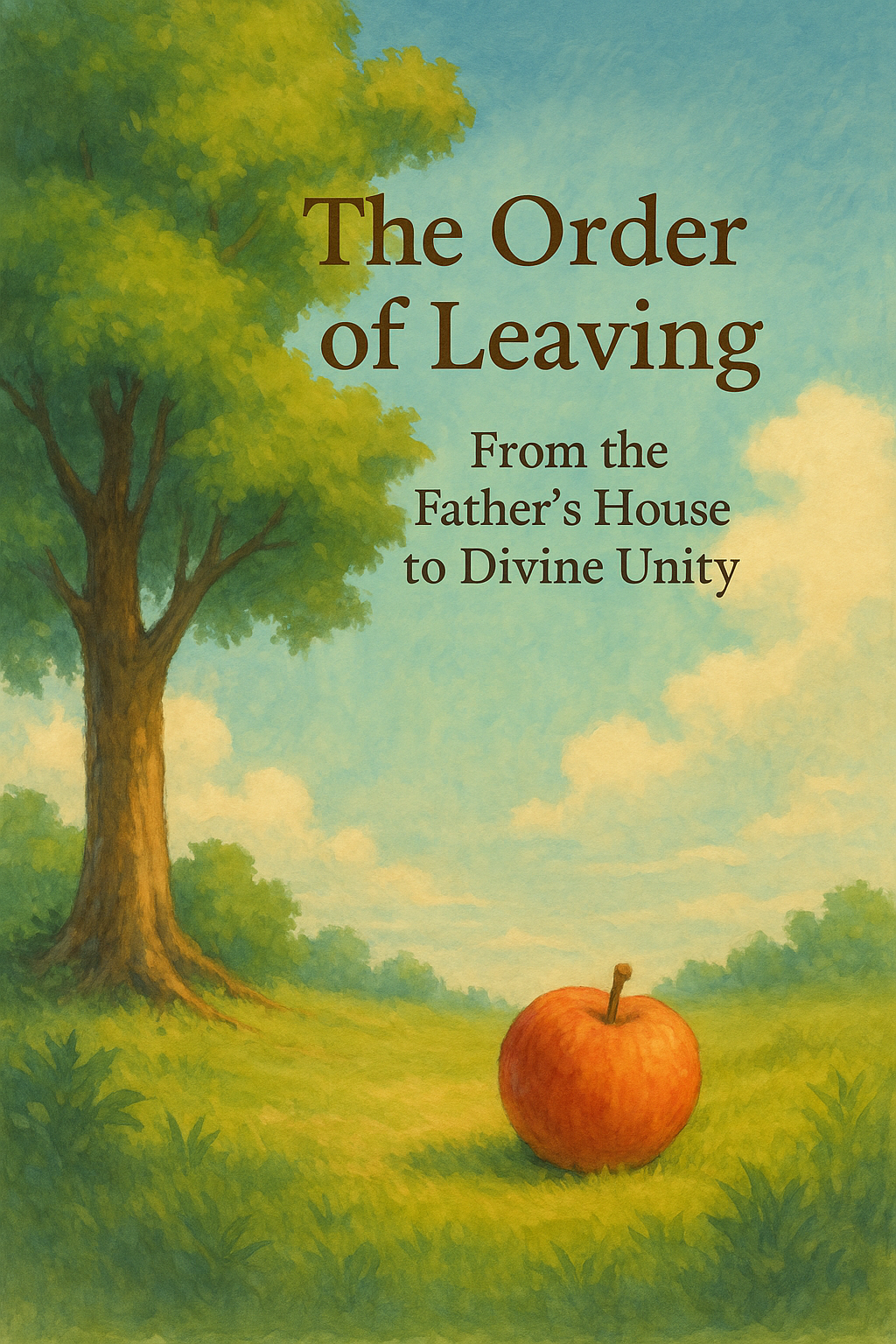
  • The Order of Leaving: From the Father’s House to the Unity of God

    The Order of Leaving: From the Father’s House to the Unity of God

    A tree bears fruit. The fruit begins inside the tree, fed by the roots, sheltered by the branches. But when it is ripe, it falls. It does not fall because it hates the tree. It falls because it is now able to carry life on its own. Inside the fallen fruit is a seed. The seed will take root and become a new tree.

    This is the law of life: received life becomes given life.

    This is also the law of family in Scripture. The first house gives life. The new house carries that life forward. The movement from one to the other is not a betrayal. It is maturity. It is blessing. Genesis says: “Therefore a man shall leave his father and his mother and hold fast to his wife, and they shall become one flesh.” (Gen 2:24, ESV) This sentence sets a pattern for all human life. Scripture describes three steps.

    First: leaving.
    Second: clinging.
    Third: becoming one.

    The Hebrew words are sharp. “Leave” (ʿāzav) means to depart, to let go, to step out of a former bond. “Hold fast” (dāvaq) means to join, to cling, to become bound in loyalty. The movement is clear: let go of the old center of belonging, form a new bond, and become one flesh in a new household.

    In other words: the old authority ends, the new authority begins. This is not a scandal. This is creation.

    Leaving Is Responsibility

    In the world of ancient Israel, the “father’s house” (Hebrew: beit ʾav) was not just a place to sleep. It was the basic legal and economic unit. The father held authority over work, property, marriage, and inheritance. Sons and their wives often stayed under that authority.

    But Genesis 2:24 creates a turning point. To “leave father and mother” is not only to move out. It is to step out from under their command and to establish a new house. The new marriage does not remain a branch of the old house. It becomes its own house.

    This means adulthood in the biblical sense is not defined by age, but by responsibility. The man who leaves takes up his own duty before God. He now answers for his household. He becomes accountable for provision, protection, faithfulness.

    So the movement is this:
    Dependence becomes responsibility.
    Receiving becomes giving.
    Being governed becomes governing.

    The parents do not lose their honor. “Honor your father and your mother” (Ex 20:12) is never cancelled. Their dignity is permanent. But the direct command of the parents no longer controls the new marriage. Rabbinic teaching expresses it this way: “Two kingdoms cannot rule the same body” (Bereshit Rabba 18:9). The point is simple. If father and husband both claim final authority, the marriage will break. Marriage requires a clear center.

    This is why leaving is not rebellion. Leaving protects the new union. The new household must be free to be whole.

    Honor Remains, Control Ends

    Jewish teaching is precise on this point. The Talmud teaches that a son must honor father and mother, but he is not required to obey them if their demand conflicts with his duty under God or with the needs of his marriage (Kiddushin 30b–31a). Maimonides (Rambam) later puts it this way: when a man takes a wife, he must separate from his father’s house, live with her, and honor her as himself, because he is now bound to her before God (Hilchot Ishut 1:2–3).

    In simple terms:

    • The new marriage becomes the first loyalty.
    • The old household loses its right to command.
    • The duty to honor the parents remains, but as respect and care, not as obedience.

    This balance matters. Scripture does not allow abandonment of parents. The Talmud even teaches that a child who lives “a thousand miles away” is still bound to honor father and mother (Kiddushin 31a). Honor means respectful speech, public dignity, and—very practically—support in weakness and old age.

    So the logic is this:
    Parents keep honor.
    Parents lose control.

    The couple gains freedom.
    The couple takes on burden.

    Leaving is not emotional drama. Leaving is a legal act of maturity.

    The Social Wisdom of Leaving

    This order is not only theological. It is also social wisdom.

    Leaving creates economic independence. The new household must carry its own weight.

    Leaving creates relational priority. Care, loyalty, sacrifice, and primary attention now belong to the spouse.

    Leaving creates a boundary that protects the marriage from being ruled by outside expectations. It prevents the situation in which parents continue to dictate daily life, finances, or decisions in the new home.

    At the same time, leaving does not humiliate the first house. The first house is honored as root. The new house is honored as fruit. The root is not denied. The fruit is not chained.

    The fruit honors the tree not by hanging on forever, but by bearing new life.

    So leaving is not the end of the first house. Leaving is the continuation of the first house in another form.

    Christ Lifts This Order Higher

    Jesus takes this same pattern and extends it even further.

    He says: “Whoever comes to me and does not hate his own father and mother and wife and children and brothers and sisters, yes, and even his own life, cannot be my disciple.” (Lk 14:26)

    He also says: “Whoever loves father or mother more than me is not worthy of me, and whoever loves son or daughter more than me is not worthy of me.” (Mt 10:37)

    When told that his mother and brothers were outside looking for him, Jesus answered: “Whoever does the will of God, he is my brother and sister and mother.” (Mk 3:35; cf. Mk 3:31–35)

    These words sound harsh. They are not hatred in the modern emotional sense. In the language of Jesus, “to hate” can mean “to place second.” The meaning is: No human bond is allowed to stand above the call of God. Not the bond to parents. Not even the bond to one’s own life.

    Jesus does not tell anyone to despise father or mother. Jesus declares a higher center of loyalty. The will of God becomes the new family tie.

    This is a shift from flesh to spirit.

    In Genesis, leaving father and mother is required to become “one flesh” in marriage. In the gospel, leaving every earthly claim is required to become “one spirit” with Christ.

    “Whoever is joined to the Lord becomes one spirit with him.” (1 Cor 6:17)

    Here is the movement:

    • First order: leave parents → form a marriage → become one flesh.
    • Fulfilled order: leave every rival loyalty → follow Christ → become one spirit.

    So Christ does not cancel the family. Christ reveals what the family was always pointing toward: a people bound together by obedience to God, not only by blood.

    A New Kind of Family

    In the world of Jesus, family was everything. Identity, safety, honor, social standing—these all flowed from belonging to the clan. To step outside the family bond was to lose protection.

    When Jesus says, “Whoever loves father or mother more than me is not worthy of me” (Mt 10:37), he is challenging the deepest social structure of his time. He is declaring that belonging to him is a deeper belonging than blood.

    This is why the Church is called the Body of Christ. It is not a club. It is not a project. It is a real family. It is the household of God. It is the bride of Christ. It is the community “born not of blood nor of the will of the flesh nor of the will of man, but of God.” (Jn 1:13)

    In this family the bond is not DNA. The bond is obedience: “Whoever does the will of God, he is my brother and sister and mother.” (Mk 3:35)

    This is not destruction of the natural family. It is its transformation. The natural family points forward to something larger and eternal.

    Abraham and the Secret of Leaving

    This pattern of leaving is not new in the New Testament. It begins already with Abraham.

    “The LORD said to Abram: ‘Go from your country and your kindred and your father’s house to the land that I will show you.’” (Gen 12:1)

    God does not ask Abraham to adjust his lifestyle. God commands Abraham to leave everything: land, clan, father’s house. In that world, this means leaving his security, his identity, and his source of belonging.

    Only after this command comes the promise: “I will make of you a great nation, and I will bless you.” (Gen 12:2)

    Notice the order. First: leave. Then: promise.

    Abraham does not become the father of nations by holding on to what he already has. He becomes the father of nations by letting go of what he already has.

    This is the same law Jesus later teaches: “Everyone who has left houses or brothers or sisters or father or mother or children or lands, for my name’s sake, will receive a hundredfold and will inherit eternal life.” (Mt 19:29)

    The pattern repeats:

    • Let go.
    • Be given back.
    • But given back in a higher form.

    Growth Through Surrender

    There is a deep logic to all of this.

    A seed cannot grow while still clinging to the branch. It must fall. It must enter the ground. It must die to what it was in order to become what it is meant to be.

    “Unless a grain of wheat falls into the earth and dies, it remains alone,” says Jesus. “But if it dies, it bears much fruit.” (Jn 12:24)

    This is not only about physical death. This is about surrender. This is about release of control.

    Abraham surrenders land and receives a promised land.
    Abraham surrenders security and receives blessing.
    The disciple surrenders human approval and receives eternal belonging.
    The married couple surrenders parental control and receives their own house.

    In each case, leaving is the doorway to fruitfulness.

    The pattern is always the same:
    Let go → Give oneself → Become new → Bear fruit.

    The Final Shape

    Now the whole movement can be seen as one line:

    Creation: A man leaves father and mother, clings to his wife, and becomes “one flesh.” This is the birth of a new house.

    Covenant: Abraham leaves land, clan, and father’s house, and becomes the father of a people. This is the birth of a nation of promise.

    Kingdom: The disciple leaves every competing loyalty and clings to Christ, and becomes “one spirit” with him. This is the birth of the people of God.

    The original order is not thrown away. It is raised up. What begins as natural structure becomes spiritual communion. Family in the flesh becomes family in the Spirit. Household becomes Church. Lineage becomes Kingdom.

    The law of leaving therefore stands at the heart of Scripture. It is creation, covenant, and salvation in one single movement.

    Leaving is not the collapse of love. Leaving is love in its mature form.

    Only the one who leaves can receive.
    Only the one who lets go can truly hold.
    Only the one who dies can live.