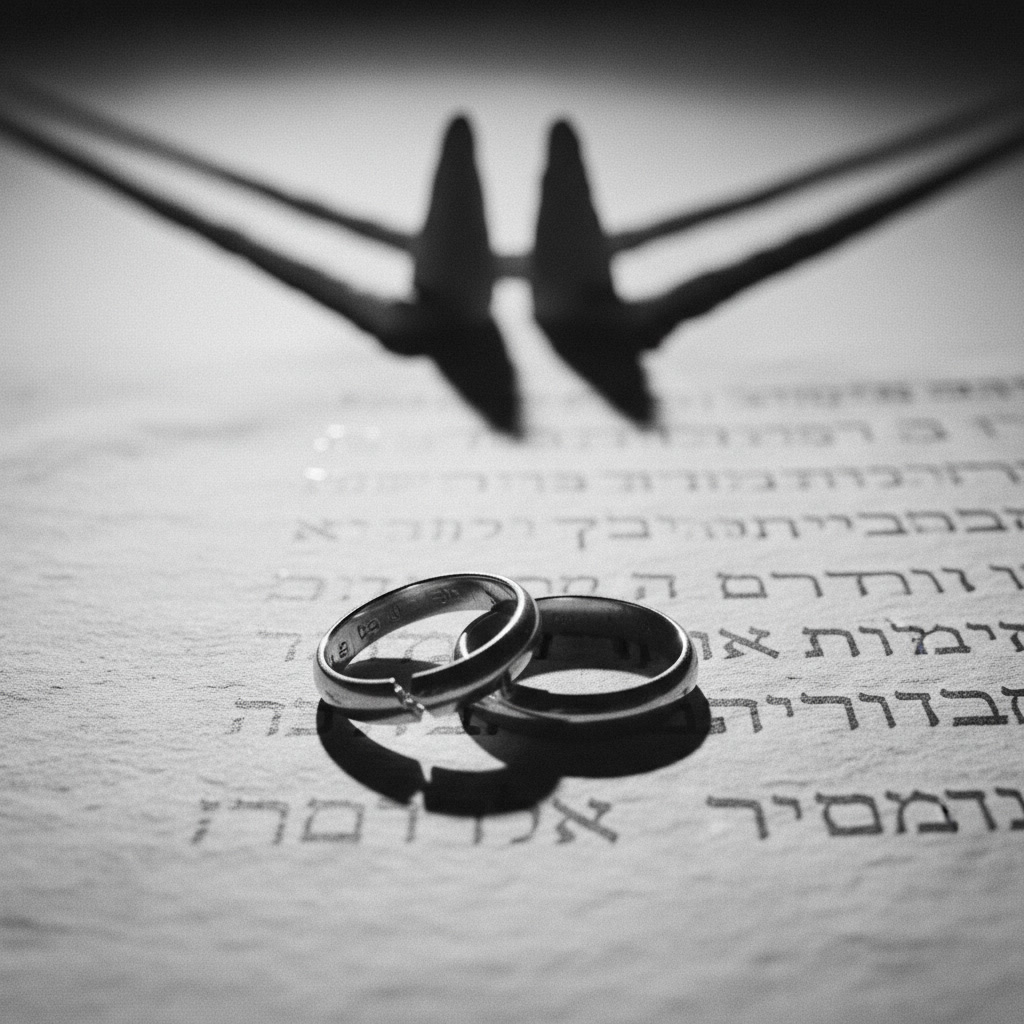
In matters of marriage, divorce, and remarriage, there is considerable uncertainty, especially among Christians. Various explanations and individual interpretations often lead to confusion. This article compiles the statements of Jesus and presents the actual textual findings in a clear and objective manner.
Central Biblical Passages in Which Jesus Speaks About Divorce
Matthew 5:31–32
It hath been said, Whosoever shall put away his wife, let him give her a writing of divorcement: But I say unto you, That whosoever shall put away his wife, saving for the cause of fornication, causeth her to commit adultery: and whosoever shall marry her that is divorced committeth adultery.
Matthew 19:3–9
The Pharisees also came unto him, tempting him, and saying unto him, Is it lawful for a man to put away his wife for every cause? And he answered and said unto them, Have ye not read, that he which made them at the beginning made them male and female, And said, For this cause shall a man leave father and mother, and shall cleave to his wife: and they twain shall be one flesh? Wherefore they are no more twain, but one flesh. What therefore God hath joined together, let not man put asunder. They say unto him, Why did Moses then command to give a writing of divorcement, and to put her away? He saith unto them, Moses because of the hardness of your hearts suffered you to put away your wives: but from the beginning it was not so. And I say unto you, Whosoever shall put away his wife, except it be for fornication, and shall marry another, committeth adultery: and whoso marrieth her which is put away doth commit adultery.
Mark 10:2–12
And the Pharisees came to him, and asked him, Is it lawful for a man to put away his wife? tempting him. And he answered and said unto them, What did Moses command you? And they said, Moses suffered to write a bill of divorcement, and to put her away. And Jesus answered and said unto them, For the hardness of your heart he wrote you this precept. But from the beginning of the creation God made them male and female. For this cause shall a man leave his father and mother, and cleave to his wife; And they twain shall be one flesh: so then they are no more twain, but one flesh. What therefore God hath joined together, let not man put asunder. And in the house his disciples asked him again of the same matter. And he saith unto them, Whosoever shall put away his wife, and marry another, committeth adultery against her. And if a woman shall put away her husband, and be married to another, she committeth adultery.
Luke 16:18
Whosoever putteth away his wife, and marrieth another, committeth adultery: and whosoever marrieth her that is put away from her husband committeth adultery.
When Is Remarriage Permitted?
From the Man’s Perspective
If a man sends away his wife, he remains bound to his wife. Entering a new marriage is then considered adultery against the woman.
An exception is mentioned if the wife has committed “fornication.” The term is not clearly defined in the original text and, depending on interpretation, can refer to various forms of sexual misconduct.
At the same time, it is possible for a man to marry an additional wife without a formal divorce from the first one.
From the Woman’s Perspective
A woman who “puts away” her husband (that is, initiates a separation) and then marries another man commits adultery. (Mark 10, 12)
She had no legal right to initiate a divorce from her husband. The divorce law was asymmetrical, granting this authority only to the man. According to Jesus’ explanation, however, divorce is fundamentally not possible.
Conclusion
Put simply and based strictly on the wording of Jesus’ statements, remarriage is only permitted in the specific situation in which the wife has committed fornication.
Adultery
Adultery is committed by a woman when she engages in sexual relations with another man while married.
For a man, it is considered adultery when he has sexual relations only with a married woman.
Statements such as: “My husband committed adultery, therefore I have the right to divorce him” do not align with the divine order as understood in this context. A husband’s adultery does not grant the woman an independent right to initiate a divorce.
However, if the woman commits adultery, the marriage is viewed as automatically dissolved (The prescribed punishment was death by stoning)
Fornication – ervat davar → porneia
In Deuteronomy 24:1, divorce is mentioned in connection with ervat davar (“something shameful / nakedness of a matter”). This expression was the subject of rabbinic discussion in the time of Jesus (the schools of Hillel and Shammai).
When the New Testament was written in Greek, ervat davar was rendered as πορνεία (porneia).
During the time of Jesus, two main rabbinic interpretations existed:
School of Shammai
- ervat davar = sexual misconduct, but not necessarily adultery (since adultery, according to the Torah, carried the death penalty).
- Meaning: Only a serious form of sexual wrongdoing justified divorce.
School of Hillel
- ervat davar = almost any form of offense, even trivial reasons.
- Meaning: Divorce was permitted even for minor causes.
Deliberate Openness of the Term
The expression ervat davar (“a shameful matter”) is neither legally defined nor illustrated with clear examples in the Hebrew text. The term was intentionally formulated to allow interpretive flexibility. This flexibility enabled the application of the law to various situations without requiring the Torah to list specific violations.
Function for the Elders of the Community
In early Israelite communities, the elders at the gate played a central role in resolving disputes, family conflicts, and legal matters. A deliberately open expression such as ervat davar allowed them to:
- examine the specific situation,
- evaluate the nature of the misconduct, and
- make a decision appropriate to both the law and the circumstances.
This allowed legal decisions to be adapted to the dynamic needs of the community.
Conclusion
Divorce is not provided for in God’s order. If a so‑called “divorce” is nevertheless pronounced, it does not constitute the dissolution of the marriage established by God but represents only an external, legal, or social separation. The original marriage bond remains intact because it cannot be dissolved by human decisions or legal actions.